Custom Web Application

HTML5, CSS3, JavaScript, jQuery, Bootstrap
PHP, REST API, MySQLi
MySQL
AJAX, Fetch API, ERP integration, localization system, drag-and-drop interface
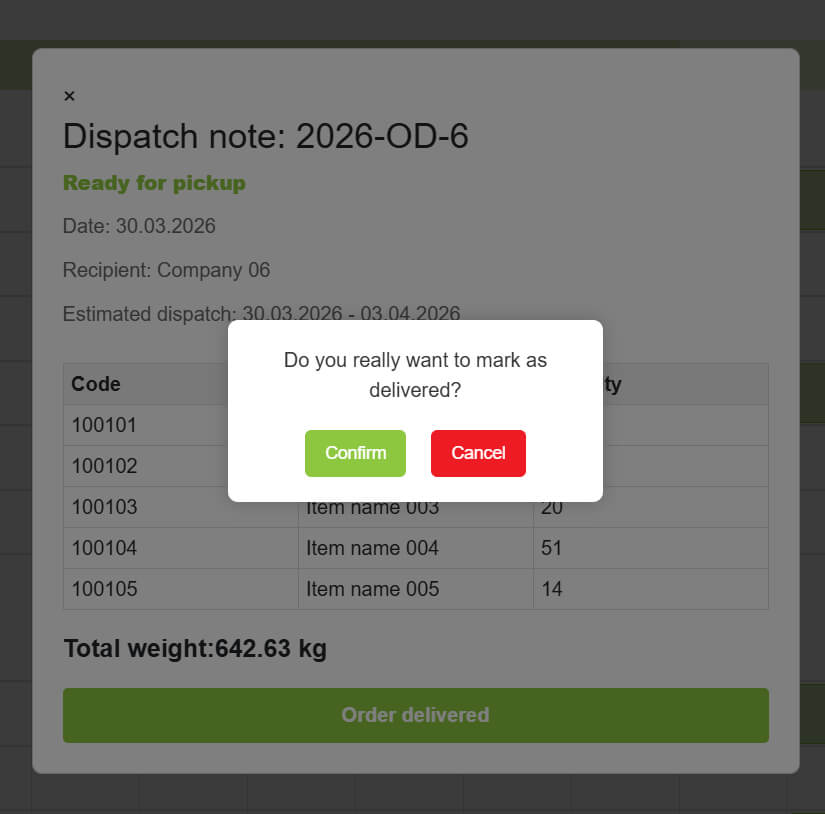
This project is a custom web-based dispatch scheduling application developed to streamline the assignment of delivery jobs (“komisions”) to vehicles and drivers. The system replaces manual planning with an interactive weekly calendar, enabling users to manage logistics operations efficiently in real time. The application supports both an administrative mode for planning and a read-only mode for operational visibility.
A key aspect of the system is its integration with an external ERP system, from which delivery jobs (komisions) are regularly synchronized. This includes not only the list of jobs, but also their statuses, customer information, item details, and calculated weights, ensuring that the scheduling interface always reflects up-to-date operational data.
Follow this link to try a demo version of an app:
To demoTo enter the app, authentication is required. Use following login credentials:
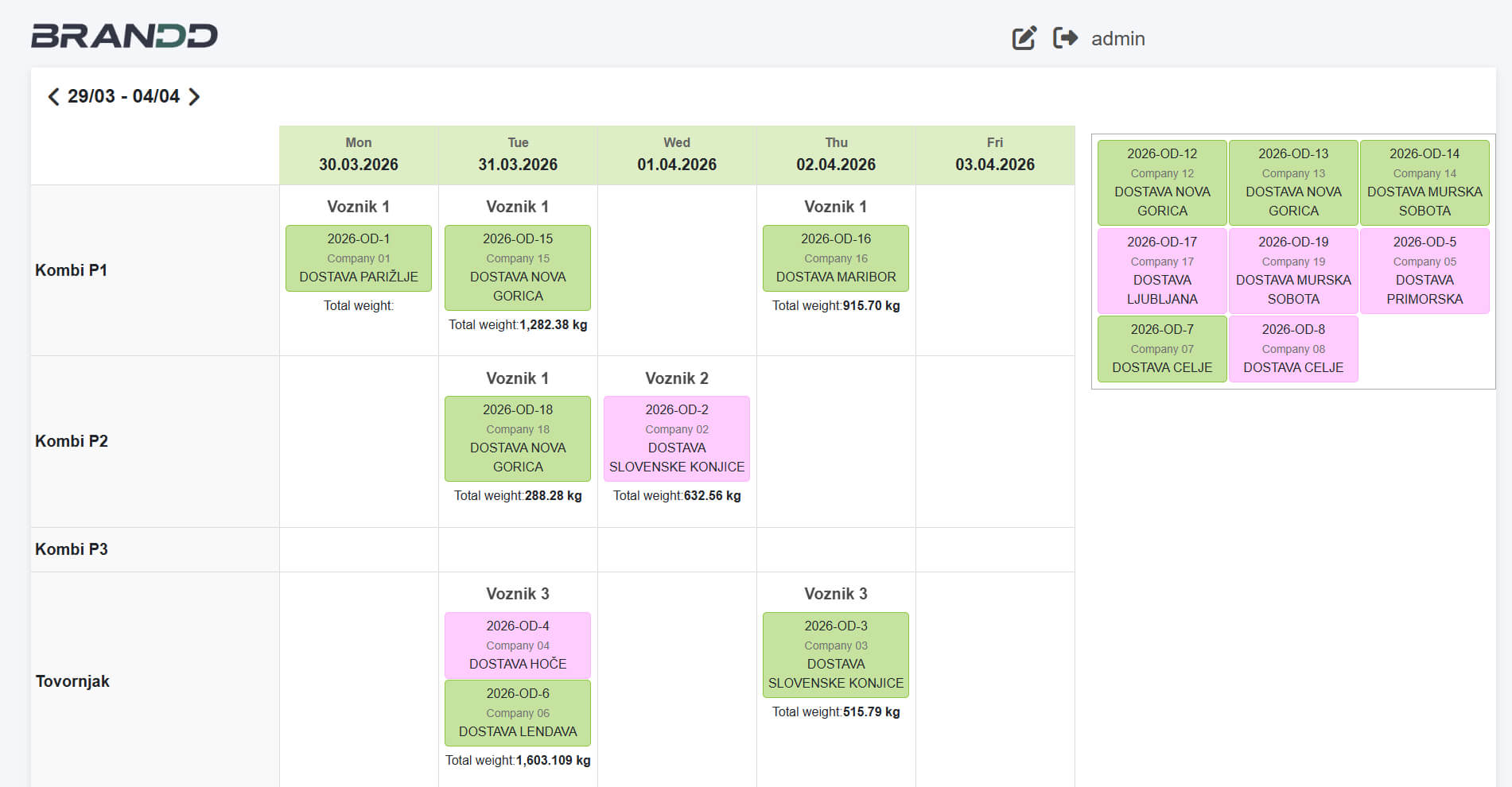
Admin view
User view
The application is designed around a calendar grid interface, where vehicles are displayed as rows and weekdays as columns. Each cell represents a scheduling slot containing delivery jobs, while unassigned jobs are listed separately for easy allocation.
The design emphasizes:
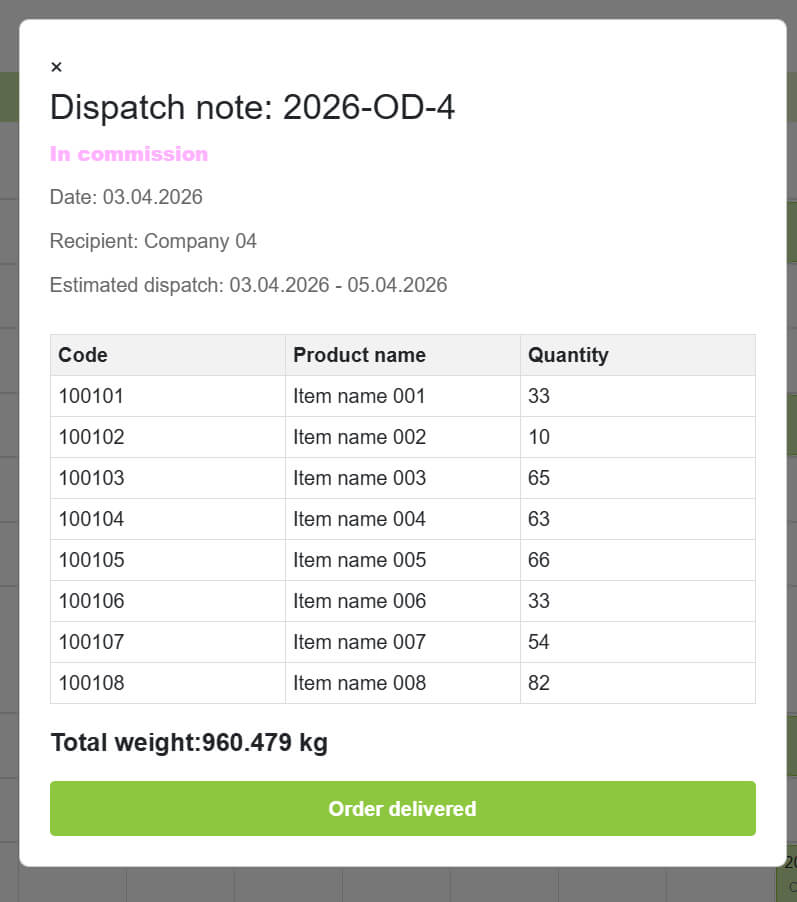
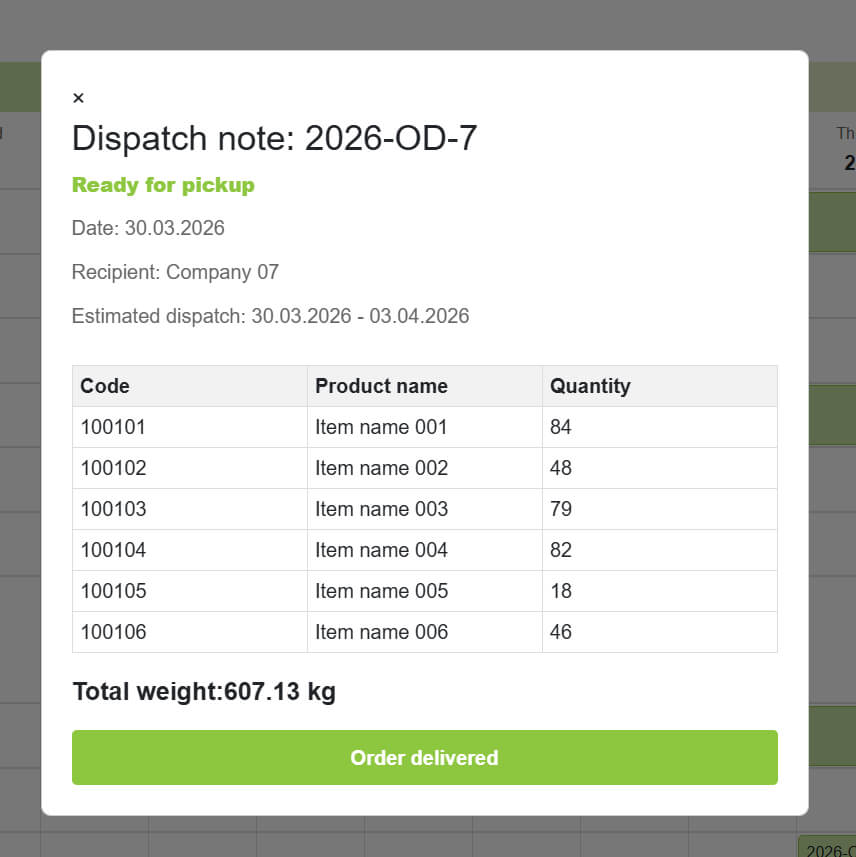
Additionally, computed data such as total delivery weight per vehicle/day is displayed to support decision-making during scheduling. Additionally, computed data such as total delivery weight per vehicle/day is displayed to support decision-making during scheduling. All displayed job details (customer names, weights, order lines, and notes) are dynamically loaded and synchronized with ERP data.
The frontend is built using JavaScript, jQuery, HTML, and CSS, leveraging the HTML5 Drag & Drop API for intuitive interaction. Dynamic updates are handled via AJAX, allowing partial page refreshes without full reloads.
The backend is implemented in PHP, exposing multiple endpoints for operations such as assigning/unassigning jobs, fetching job details, and calculating weights. Data is exchanged in JSON format, ensuring clean separation between frontend and backend logic.
Integration with the ERP system is handled through synchronized data sources, allowing the application to pull updated komision records, including statuses and detailed order information. This ensures consistency between planning and execution layers of the business process.
A MySQL database stores structured data across tables such as komision, schedule, vehicles, and drivers. Prepared statements (mysqli) are used for secure database interaction.
Several non-trivial challenges were addressed during development:
The final system delivers a responsive and reliable scheduling tool that significantly improves operational efficiency. Users can quickly assign jobs, visualize workloads, and track delivery constraints such as weight. The application reduces manual errors and provides a solid foundation for future enhancements such as route optimization.
This project demonstrates strong full-stack development skills, including frontend interactivity, backend API design, database modeling, and system integration. It highlights the importance of handling asynchronous operations, maintaining UI consistency, and designing systems aligned with real-world workflows and external data sources.