Custom Web Application
HTML5, CSS3, JavaScript
PHP, REST API
MySQL
Fetch API, JSON, ERP integration, localization system
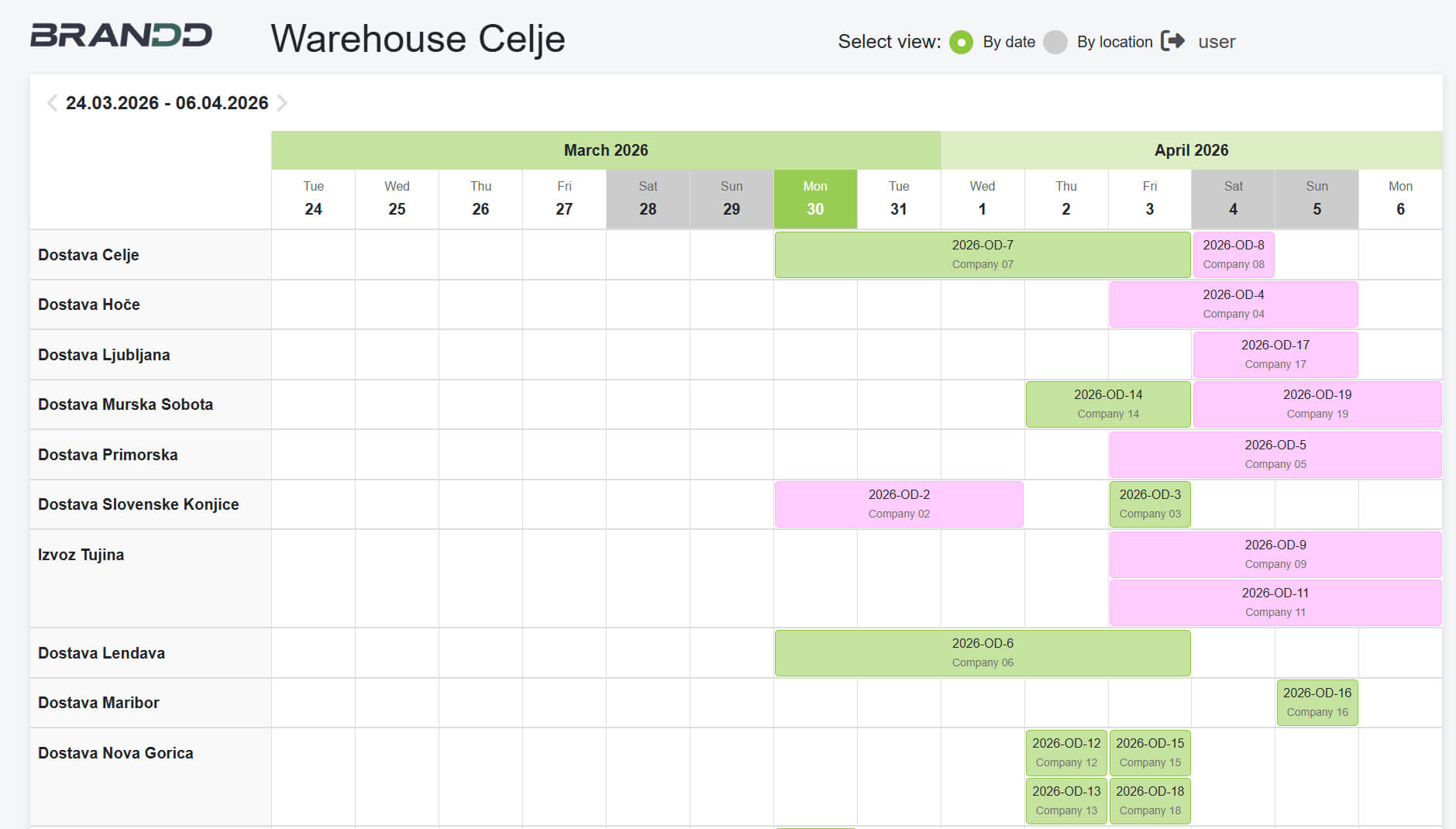
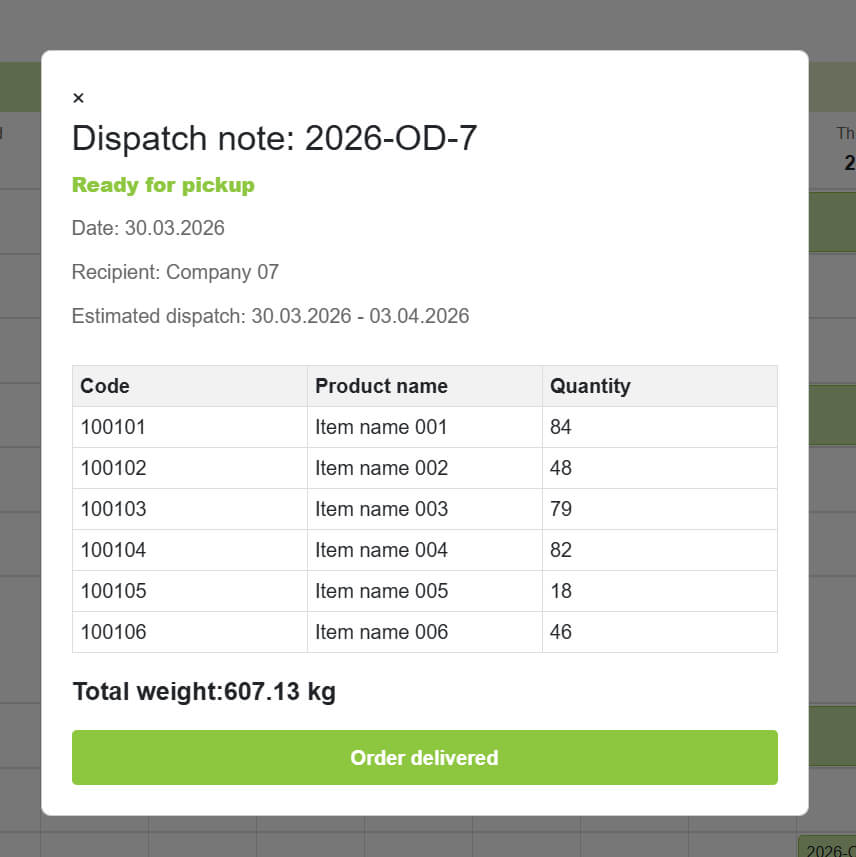
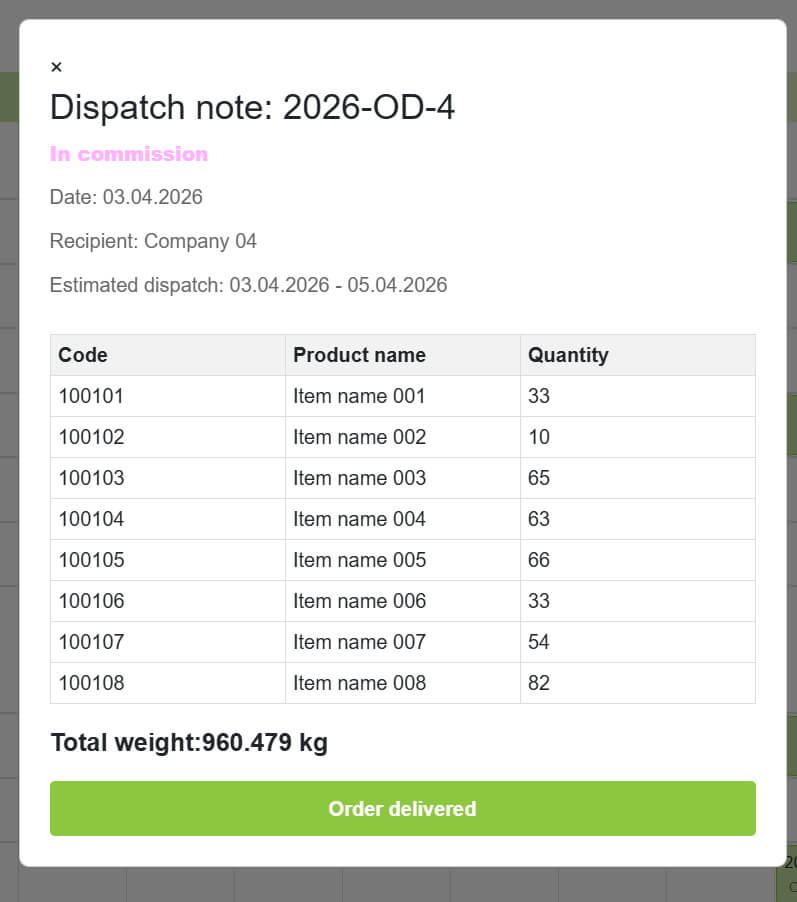
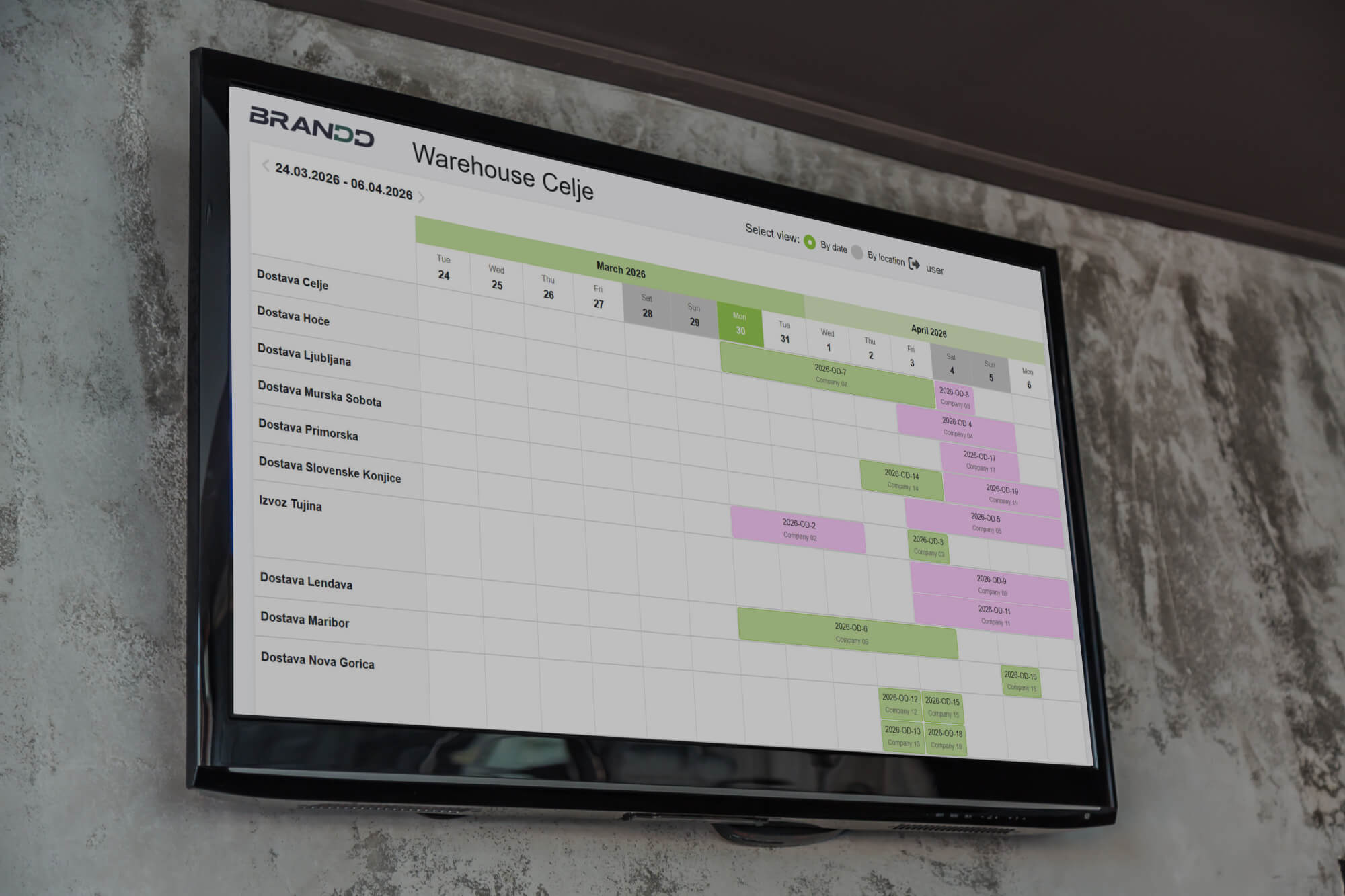
The Warehouse Planning App is a web-based internal tool designed to streamline the visualization and management of outbound orders in a warehouse environment. The application integrates directly with an ERP system (SAOP), from which it retrieves real-time data about dispatch orders, delivery dates, and logistics details.
The core goal of the project was to replace static or fragmented planning processes with a dynamic, interactive interface that allows warehouse staff to:
The result is a responsive, data-driven interface tailored for operational efficiency in logistics workflows.
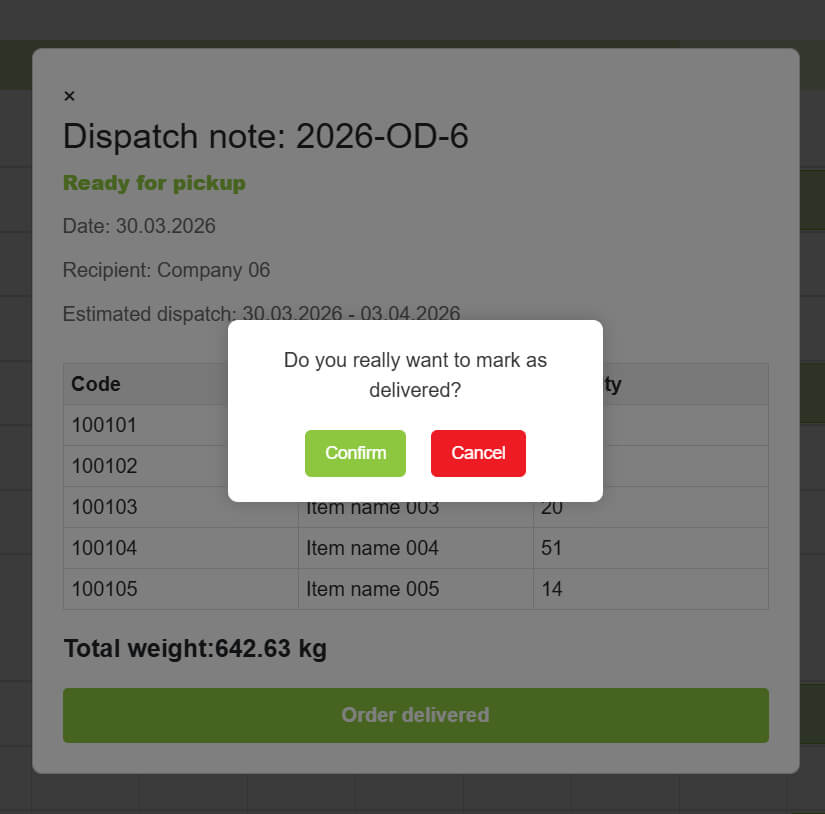
The application replaces manual coordination with an interactive interface, helping warehouse staff quickly understand what needs to be prepared, where it is going, and when it is scheduled.
Follow this link to try a demo version of an app:
To demoTo enter the app, authentication is required. Use following login credentials:
The concept of the application is built around clarity, speed, and usability in a warehouse context, where users need immediate insight rather than complex interactions.
The app introduces two complementary visualization modes:
This duality addresses two key operational questions:
When is something being dispatched?
Where is it going?
The UI prioritizes low cognitive load, which is critical in fast-paced warehouse environments.
The frontend is developed in vanilla JavaScript using an IIFE pattern, ensuring encapsulation and avoiding global scope pollution. The application uses a state-driven approach, where a central jobs array holds all active data.
Key features include:
The backend consists of lightweight PHP API endpoints:
Data is fetched asynchronously using the Fetch API and refreshed every 5 seconds, ensuring near real-time synchronization with the ERP system.
The application significantly improves warehouse workflow by:
This project highlights how a lightweight, custom-built solution can outperform generic tools when tailored to a specific operational problem. By combining efficient frontend rendering logic with simple backend APIs, the application delivers high performance, clarity, and usability without relying on heavy frameworks.